

BLOG
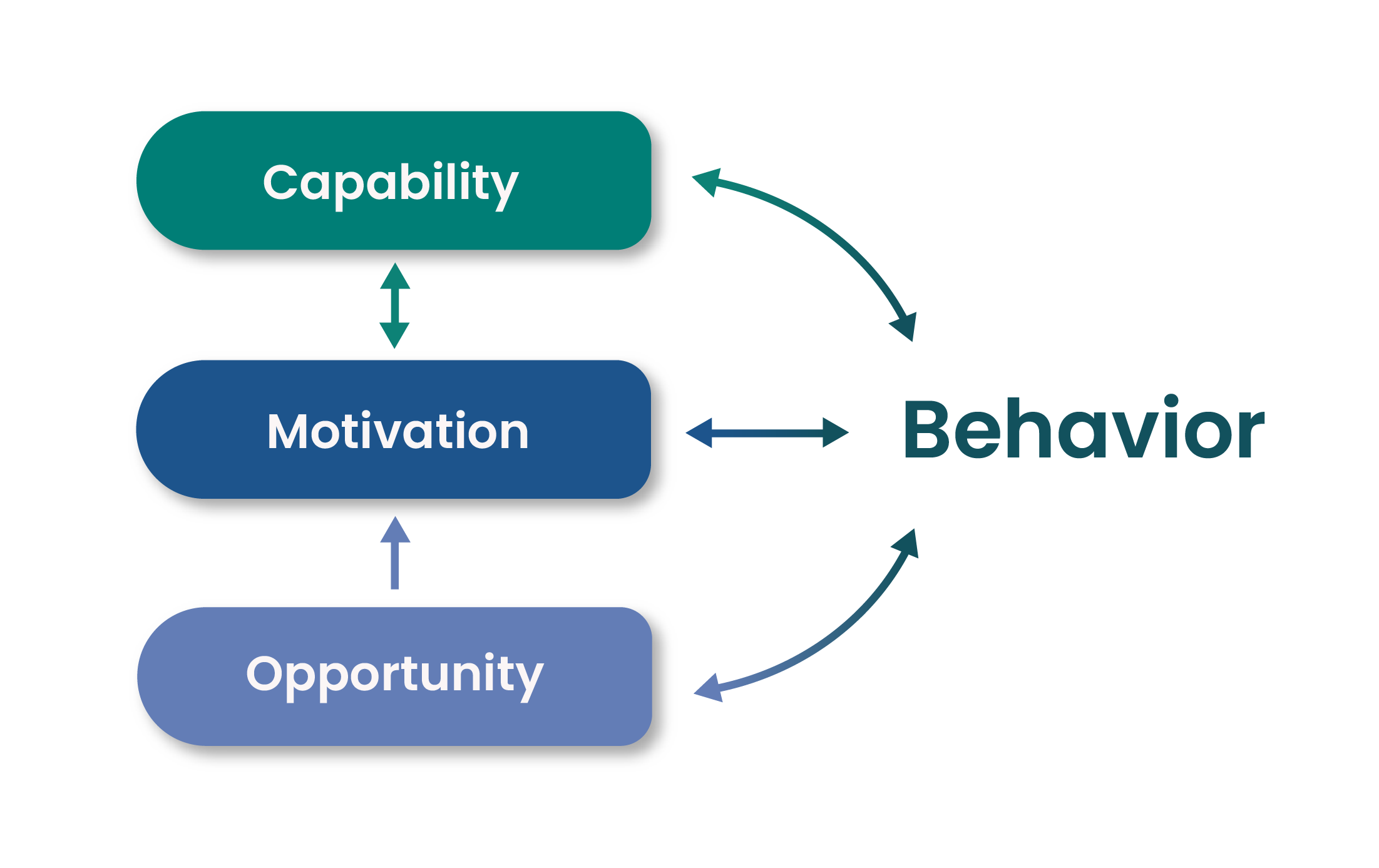
COM-B: a simple formula for digital behaviour change
Digital habits are hard to shift. I know as I’ve been working on my own Digital Harmony since 2013! We all know what we should do but the problem is often making a change and sticking to it. That’s why I love the COM-B model which helps to explain why behaviour change succeeds or fails. It was developed at University College London (UCL) by Professor Susan Michie, Professor Robert West, and Dr Maartje van Stralen in 2011.
Become more human to thrive in the AI age
AI is changing the way we work at an incredible pace. Every week seems to bring a new tool promising to write faster, analyse quicker or automate another task. It's no surprise that many people are starting to wonder: How do I make sure I don't become overly dependent on AI? How do I hold on to the skills that make me valuable?

Digital Intention: why making conscious technology use matters now more than ever
If you find yourself opening apps, checking notifications or inbox and now turning to AI without thinking about it you are not alone. Most of us experience an element of autopilot when it comes to our digital behaviour. And now as our digital tools are becoming ever smarter and faster, in turn our digital habits are becoming increasingly automatic.

The Attachment Economy: could we become emotionally hooked on AI?
For the past 10 years I’ve been explaining to the people I meet in my training sessions about the ‘attention economy’, how apps and websites make their money through advertising revenue and are designed in such a way to try and keep us scrolling and clicking for as long as possible. The more time we spend online, the more money they make through advertising revenue.

AI in virtual meetings: helping us or quietly adding to disengagement?
For many of us, the AI assistants in our virtual meeting software have been transformative. I’ve always struggled to take notes while keeping up with discussions, so when Zoom and Teams introduced transcripts, everything changed. I could finally revisit what was said, check actions whilst also staying aligned during the meeting without scrambling to capture every detail.

Why you can’t stop checking your phone and how to take back control
Have you ever picked up your phone to check the weather, only to find yourself scrolling 20 minutes later with no idea how you got there? If so, you are not alone. Many of us feel a constant pull towards our phones, and while it is easy to blame ourselves, the reality is more complex.

What Solus Ceramics shows us about fixing digital culture
When organisations come to me, it’s rarely because something is “broken.” It’s because something is unsustainable in this constantly connected world that we all live and work in. Solus Ceramics is a perfect example, a highly successful remote, fast‑moving, client‑driven business with teams who care deeply about doing a great job.

Are we really taking holidays anymore?
Every summer, millions of us pack our bags hoping for rest, reset and perspective. Yet more and more people are returning from annual leave feeling exactly the same. Tired, foggy and still plugged in. The problem isn’t the holiday – it’s that we’re not actually switching off.

The UK’s under‑16 social media ban: time for adults to look up from their screens too
The UK Government’s proposal to ban social media for under‑16s has sparked predictable debate, concern, relief and frustration. But beneath the noise sits a deeper truth: this moment isn’t just about young people. It’s about all of us.

When Microsoft removed ‘Work Offline’… and what we need to do now
For more than ten years, working offline in Outlook has been my number‑one recommendation for anyone who wants to protect their focus, reduce digital overwhelm and get meaningful work done. It’s also been one of the most important tools in my own ADHD‑friendly workflow.

Why proper breaks matter more now than ever
Most of us step away from our desks during the day to make a drink and take quick a break. However, I’ve asked 500 people and only 35% of them regularly take screen free breaks. So that means everyone else is stepping away from work for a pause with their phone in their hand at least some of the time.

AI Adoption: Why organisations need a new kind of risk mapping
As organisations race to integrate AI into their everyday operations there is a question that I believe they all need to ask themselves… Do we truly understand the people-centred risks of the new technologies we are adopting?
Bringing AI into the workplace is creating a profound shift in how work is done, decisions made and skills evolve…

HARMONY: How to Build a Healthy Digital and AI Culture at Work
For more than a decade I’ve been helping organisations rethink their relationship with technology. My work started long before AI became mainstream, when I found myself overwhelmed, unable to switch off and struggling to sleep. With a background in behavioural psychology, I wanted to understand what was really going on.

Why employers must match UK schools and prioritise digital wellness
The UK Government is considering how they could start to make British schools smartphone-free. The rationale is clear: to protect students’ mental health, encourage healthy friendships and create learning environments where pupils can focus and bring their full attention to their schoolwork.

How authentication habits shape our attention at work
One of the most common objections I hear when I encourage people to keep their phones out of reach during focused work is this one. “I need my phone for two factor authentication.” And they are right.

My ADHD diagnosis and the digital habits I finally understand
In May 2025 I was diagnosed with ADHD. That moment gave me language and clarity for struggles I’d carried for years. What I had often dismissed as “bad habits” or “lack of discipline” were in fact patterns shaped by how my neurodivergent brain works.

Make Meetings Matter: simple shifts for better collaboration
Meetings are a staple of modern working life, but they don’t always feel meaningful. They can for many often feel like a drain on time, energy and focus. More and more research is coming out showing that poorly managed meetings are the bane of many desk-based workers’ lives.

Protecting digital wellness in an AI-centric legal practice
Law firms are increasingly using AI to boost efficiency - but it’s just as important to think about how it affects people. Click here to read an opinion piece I wrote for Lawcare which explores how leaders can make sure AI supports, rather than replaces, human skills like judgement, creativity and connection.

Team morale when hybrid working
Flexible and hybrid working is still very much the norm for lots of working teams. The benefits are undeniable, and with digital technology central to our work, colleagues are able to stay connected and ensure projects stay on track.

Increase employee engagement, focus, wellbeing and teamwork with a Digital Communications Charter
Digital technology is central to most tasks in today’s fast-paced work environment. However, as the amount of different types of software increases, the need for clarity around digital behaviour and expectations must be prioritised...